The full breakdown
Two days to give yourself the coaching skills the other courses missed
The OWNERS model, in full - plus the frameworks that support it: RAFT, SPLATR, GROW Model, the Coaching Wheel, the Leadership Trap, Liberated Leadership and the Four Ownership Questions. Practised live, not just explained.
Is this you?
Built for managers who are capable - and stretched thin.
This is for you if:
- ✓You were promoted for your technical or delivery skill, not for people skills
- ✓Your team brings you problems instead of solutions
- ✓You've attended leadership training before and were unable to apply what you learned
- ✓You want a practical coaching model, not more theory
- ✓You're responsible for developing other managers too
What changes by day two
- ✓You'll have a repeatable model for any coaching conversation
- ✓You'll recognise the moment you're about to rescue - and how to stop
- ✓You'll have practised the Four Ownership Questions live
- ✓You'll leave with a plan for your next three real conversations
- ✓Your certificate: 10 hours CPD, accredited
The model
The OWNERS Model

"Let me fix this for you." → "Let me help you think this through."
That's what builds trust, confidence and personal ownership with the people you lead.
What supports the model
Seven tools, taught and practised over two days
RAFT
A simple tool for uncovering what's really driving someone's behaviour: their Results, Actions, Feelings and Thoughts. You'll use this structure to learn what's driving a problem before you respond to it.
SPLATR
An information-gathering model for asking questions that create total clarity for everyone involved - Situation, People, Location, Action, Time and Reason. You'll use it to get the full picture fast, before deciding what to do about it.
The Leadership Trap
The cycle capable managers fall into without meaning to: people bring you a problem, you solve it, they leave happy, they come back next time - and they get more dependent while you get busier. It happens through three habits: giving answers too quickly, taking responsibility that belongs to someone else, and rescuing instead of coaching. Naming it is what makes it possible to interrupt it.
The Four Ownership Questions
A short, repeatable set of four questions that hand a problem back to the person who owns it, because every one of them makes the other person think. Practised until it feels natural, not scripted.
GROW Model
The classic coaching structure - Goal, Reality, Options, Way Forward - used here as the backbone for turning a coaching conversation into a clear, owned action, not just a good chat.
The Coaching Wheel
A visual tool for helping someone see their whole situation at a glance - where they're strong, where they're stretched, and where the real conversation needs to happen - instead of getting stuck on the loudest symptom.
Liberated Leadership
The mindset that holds the whole model together: leadership isn't about having every answer it's about building people who don't need you to. This is the shift you'll carry back to your desk on Monday.
THE TWO DAYS
What actually happens in the room
Observe, Work With, Notice
Observe what is really happening: how to slow the conversation down, listen beyond the first answer and understand the real issue before jumping in with advice.
Work with the person’s thinking: how to notice the thoughts, feelings, actions and results that may be driving the situation, not just what is being said on the surface.
Notice the Leadership Trap: why capable managers rescue, fix and advise without noticing - and what it costs their team.
Catch yourself before you rescue: recognising the moments when you are about to step in, take over or give advice too quickly.
Explore, Refocus, Support
Explore Ownership Questions: practising questions that help people think for themselves and take more responsibility for their next steps.
Refocus towards direction: helping someone move from confusion or dependence towards clarity, choice and a more useful way forward.
Support action: full OWNERS conversations, coached and observed, using your own real workplace scenario.
Personal action plan, Liberated Leadership mindset and CPD certificate.
THE PRACTICAL DETAILS
Venue, dates and investment
When & Where
10-11 November, 09:00 - 17:00 each day
Glasgow Training Rooms - The Pentagon Centre, 36 Washington Street, Glasgow G3 8AZ
Investment: £495
Two-day in-person workshop · 10 hours CPD, accredited by the CPD Standards Office
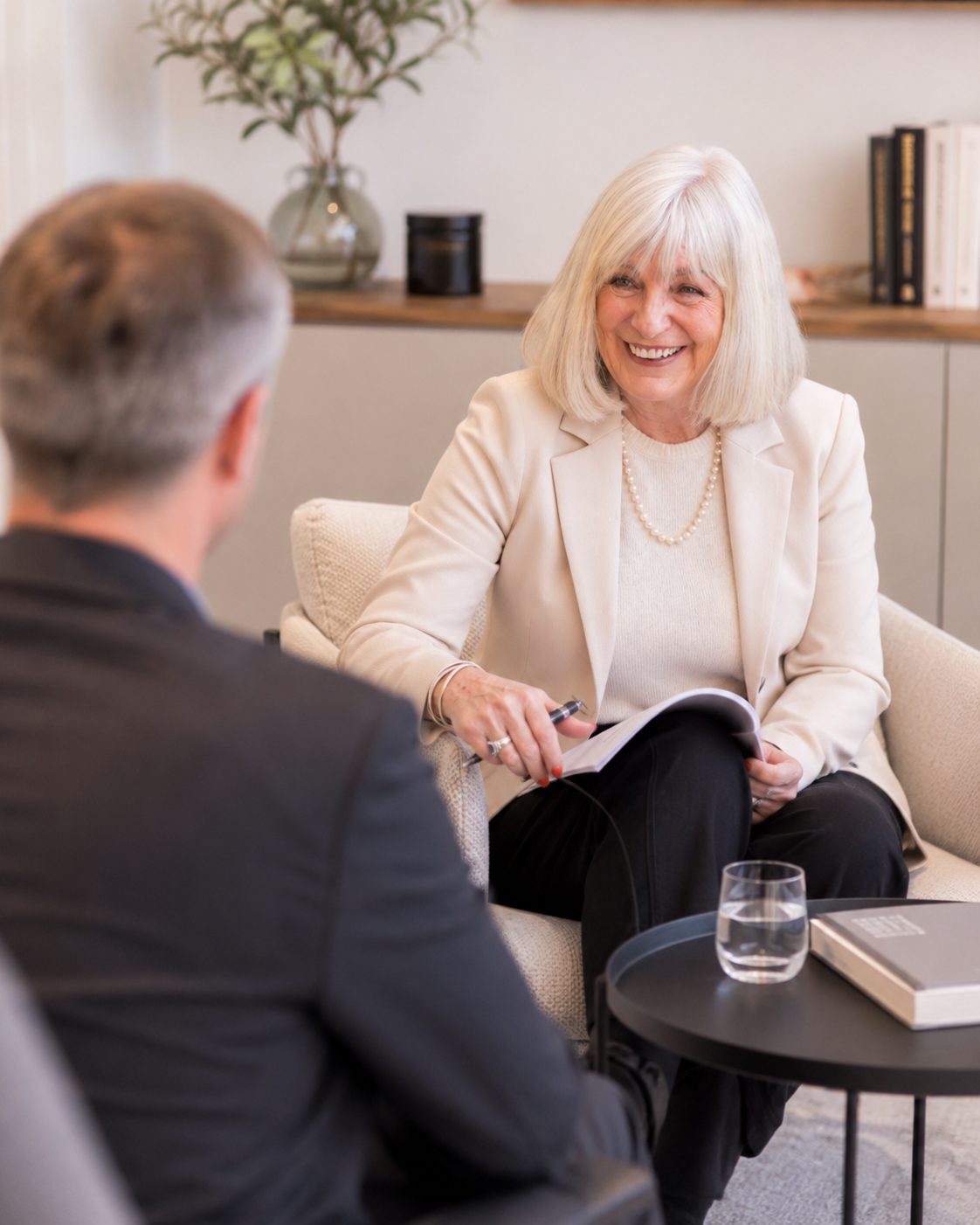
ABOUT THE FACILITATOR
Fiona Campbell Arrand
Fiona Campbell Arrand is the author of the bestselling leadership book Working with Trust, an international speaker, Business Coach and Leadership Development Trainer with over 35 years' experience helping leaders build trust, strengthen communication and create high-performing, psychologically safe teams.
She is the creator of the Working with Trust Framework™ NLP Leadership & Coaching Programme, combining leadership development, coaching, emotional intelligence and NLP to help leaders communicate with clarity and confidence in today's AI-supported workplace. Her programmes have been delivered across the UK and Middle East to organisations in government, healthcare, banking, hospitality and industry.
Fiona is known for making complex communication and behavioural skills simple and practical and is passionate about helping leaders develop the human skills AI cannot replace - building trust, psychological safety, and cultures of ownership and collaboration. The OWNERS Model taught in this workshop is built on the same trust frameworks behind her book.
Questions
Frequently Asked Questions
I've already done leadership training. Why would this be different?
How many people are in the room?
Where exactly is the venue, and is there parking?
Do I get a certificate?
Can my company book multiple places, or pay by invoice?
What's the cancellation policy?
READY WHEN YOU ARE
Give yourself the skill most courses miss.
Places are limited to keep the room small enough to practise in properly. Secure yours now.
Secure checkout · Invoice available for teams booking multiple places - contact us for details
Coaching with Impact · Fiona Campbell Arrand · Accredited Provider, CPD Standards Office