
Workplace Trust Is What Creates Psychological Safety
Sep 08, 2026People do not speak up just because you tell them they can, they speak up when they believe it is safe to do so.
That is why workplace trust and psychological safety are so closely connected. You cannot simply announce that you have a psychologically safe workplace and expect people to suddenly share ideas, admit mistakes, challenge thinking or say when something does not feel right. People watch what happens first. They notice how their leaders respond when someone disagrees, makes a mistake, asks a question or when someone challenges something.
If people trust that they will be listened to, treated with respect and not made to feel silly, they are far more likely to contribute honestly. But if they have learned that speaking up leads to blame, embarrassment, being ignored or being labelled as difficult, they will protect themselves. They will still attend the meetings, nod in agreement and say the right things, but you will not be getting the best from them.
And that is a real problem for leaders.
Because when people do not feel safe to speak up, they stop sharing the important stuff. You miss the early warnings and the ideas that could have improved a project, prevented a mistake or helped a team work better together.
Trust Comes First
Psychological safety starts with trust. I am not talking about the kind of trust that appears in a value statement or on a poster in the office, but the kind of trust people experience when they work with you every day. Trust is earned when people know you will listen without jumping in too quickly and when you follow through on what you said you would do. It is built when you give credit, admit when you do not know something and deal with difficult conversations fairly rather than ignoring them.
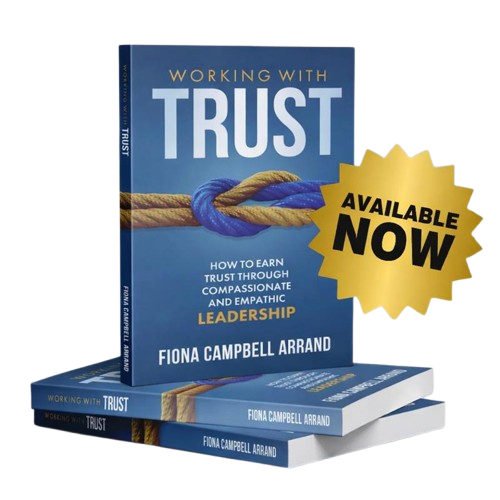
In my book Working with Trust, I talk about trust being built through everyday behaviour. Not from an inspiring speech or one away day. It's the repeated experience people have from working with you. Do you say what you mean? Do you do what you say? Do you listen properly? Do you treat people with respect both when things are going well and when things are difficult?
That is what people are paying attention to.
And when those everyday behaviours are consistent, people begin to feel more secure. They stop protecting themselves and become more comfortable solving problems, contributing, asking questions and taking responsibility.
These are the behaviours that allow psychological safety to grow.
Why People Hold Back
Most people have had an experience at some point where speaking up did not go well.
Maybe they asked a question and were made to feel foolish or they challenged something and were seen as having a negative attitude. Maybe they admitted a mistake and the response made them wish they had kept quiet or they watched someone else speak up and decided, “I am not putting myself in that position.”
People remember when these things happen.
They may not talk about them or not even be consciously aware of them, but those experiences influence what they are willing to say next time. So when a leader says, “My door is always open,” or “Please speak up,” the team may still hold back because their nervous system is not sure if it is actually safe to do so or not.
That is why leaders need to understand that people being silent does not always mean they are agreeing with what is happening. Not speaking up is not always a sign that your team are happy with what is happening. Not asking questions in meetings does not always mean everything is clear. Sometimes it means people have learned that staying quiet is easier than saying what they really think.
This is especially important in times of change, uncertainty or pressure. When people are under pressure, they are more likely to protect themselves. They may become careful with what they say, avoid risk, say what they think you want to hear or keep concerns to themselves until the problem becomes much bigger.
And by then, leaders are often wondering why nobody said anything sooner.
How Trust Changes the Conversation
When people trust you conversations are more open and honest. People are more willing to say, “I am not sure this will work.” or to admit, “I made a mistake and I need help fixing it.” They feel able to ask, “Can we look at this another way?” or “I am struggling with this and I am not sure what to do next.”
That does not mean everyone agrees all the time. In fact, when you have real psychological safety, you will often hear more honest challenge, not less. People can disagree respectfully. They can say what they think without worrying that they will be judged, ignored or pushed out of the conversation. They can bring a different view because they know it will be considered, even if it is not always agreed with.
This is where trust makes the difference. Without trust, challenging something can feel threatening, both to the person raising it and to the leader receiving it. With trust, challenging something can become useful because it gives you more information, a different perspective and a better chance of making good decisions.
As a leader, one of the best things you can do is stay open minded when someone brings a concern, especially when it is not what you wanted to hear. Pause before defending your decision, and listen for what might be useful in what they are saying. Because the way you respond in the moment, shows people whether it is safe to be honest with you or not.
If someone raises a concern and you dismiss it, admits a mistake and you make them feel ashamed, asks a question and you make them feel awkward for asking, they learn that their opinion is not valued. But if someone raises a concern and you thank them for bringing it up, admits a mistake and you focus on what can be done and what can be learned, or asks a question and you treat it as useful, they will open up to you
Over time, those small responses shape the culture far more than any statement about psychological safety ever will.
Psychological Safety Does Not Mean There Are No Standards
One misunderstanding I often see is the idea that psychological safety means being soft, avoiding challenge or letting people do whatever they want. It does not mean that at all.
Psychological safety does not remove accountability. It makes accountability easier because people are more willing to be honest about what is happening. They are more likely to tell you when they are stuck, when they have made a mistake or when something is not going to plan. That gives you the chance to deal with things sooner and in a much more useful way.
A psychologically safe team is not a team where anything goes. It is a team where people know they can speak honestly and still be treated with respect. It is a team where high standards and human understanding can sit together. You can still expect good work, clear communication and personal responsibility, while also creating an environment where people do not feel they have to hide mistakes or pretend everything is fine.
You might say, “This standard matters, and I want to understand what got in the way.” Or, “We need to improve this, and I want us to look at it properly rather than blame anyone.” Or, “This cannot continue, and I want to have a conversation about what needs to change.” Those conversations are not soft. They are clear, honest and respectful.
That is strong leadership. It is not about letting people off the hook. It is about keeping people engaged enough to take responsibility rather than pushing them into fear or defensiveness.
What You Can Do Every Day
The good news is that trust and psychological safety are built in very practical ways. You do not need a huge initiative to begin. You can start by looking at how you respond in everyday conversations, especially the moments when someone brings you something that feels uncomfortable, inconvenient or different from what you expected.
When someone brings you a problem, do you listen first or jump straight in with the answer? When someone disagrees with you, do you get curious or become defensive? When someone makes a mistake, do you look for learning or look for blame? When someone is quieter than usual, do you notice and check in, or assume everything is fine?
These small moments matter more than many leaders realise because this is where people decide whether to trust you. They are not only listening to what you say. They are watching what you do when things are under pressure.
You can also be more intentional about inviting people to contribute. Instead of asking, “Does anyone have any questions?” at the end of a meeting, because often that gets silence, you might ask, “What have we not considered yet?” or “Where might this be difficult in practice?” or “What would make this easier for the team to commit to?”
Those questions feel different because they give people permission to think and contribute. They also show that you are not just looking for agreement. You are looking for honest input.
And when someone does contribute, slow down enough to acknowledge it. You do not have to agree with everything, but you can still show that you value what they have said. You might say, “That is useful to hear,” or “Thank you for saying that,” or “I had not looked at it that way.”
Those responses may seem insignificant but they send an important message: it is safe to speak here.
The Link Between Trust, Learning and Growth
Psychological safety is essential for learning, especially in workplaces that are changing quickly. If people are afraid to get things wrong, they will avoid trying new things. If they think mistakes will be used against them, they will hide them. If they do not trust the leader, they will wait to be told what to do rather than take initiative.
But when we trust each other, people are more willing to learn. They can test ideas, ask for feedback and be honest about what worked and what did not. They can take ownership without feeling they have to pretend everything is perfect.
That is how teams grow.
This matters even more now as leaders and teams are dealing with constant change, new technology, different ways of working and increasing pressure. People need to be able to say, “I do not understand this yet,” or “I think there may be a better way,” or “I tried this and it did not work.”
That's not them being weak, comments like that show people are learning. And when you can accept them well, without making people feel silly, blamed or exposed, the whole team becomes stronger.
A Question For You
So, how safe do people really feel around you?
Not how safe you hope they feel, or how safe you have told them they are, but how safe their behaviour suggests they feel. Do they ask questions? Do they challenge ideas respectfully? Do they admit mistakes early? Do they tell you when something is not working? Do they bring you their thinking, or only what they think you want to hear?
These are useful questions because they help you see what people trusting each other in the workplace looks like in practice. If people are holding back, it does not mean you are a bad leader. It may simply mean there is more trust to build, more listening to do or more consistency needed in how you respond.
Start small. Choose one conversation this week where you listen a little longer than usual. Ask one question that invites honesty. Thank someone for raising something difficult. Admit something you are still learning. Follow through on one commitment you have made.
That is how you earn and build trust and when people trust each other they are more likely to feel psychologically safe.
Closing Thought
Workplace trust is not separate from psychological safety. It is what makes psychological safety possible.
People need to know they can speak honestly and still be respected, they can make a mistake and still be supported to learn and that their ideas, questions and concerns will not be used against them.
That does not happen because you say, “This is a safe space.” It happens because, day after day, people experience you as someone who listens, tells the truth, follows through, shows respect and responds with care when things are difficult.
That is what creates safety, builds trust and is what helps people bring more of their thinking, honesty and capability into the work they do every day.
___________________________________________________________________________________________________
Click here to learn more about our courses

_______________________________________________________________________________________
FAQs
1. What is psychological safety in the workplace?
Psychological safety is when people feel able to speak up, ask questions, share ideas, admit mistakes and raise concerns without fearing that they will be judged, blamed or embarrassed. It does not mean there are no standards. It means people can be honest and still be treated with respect.
2. How does trust create psychological safety?
Trust creates psychological safety because people are more willing to speak honestly when they believe their leader will listen, respond fairly and not use their honesty against them. When leaders are consistent, respectful and open, people feel safer to contribute.
3. Why do people stay silent at work?
People often stay silent because they have learned that speaking up can feel risky. They may worry about being judged, ignored, blamed or seen as difficult. Sometimes silence comes from past experiences, either in the current team or in previous workplaces.
4. Does psychological safety mean people can avoid accountability?
No. Psychological safety and accountability work together. When people feel safe, they are more likely to admit mistakes, ask for help and take responsibility. It allows leaders to address issues earlier and more constructively rather than waiting until problems become bigger.
5. What can leaders do to build more psychological safety?
Leaders can build psychological safety by listening properly, responding calmly to concerns, thanking people for honest input, admitting when they do not have all the answers and following through on what they say. Small, consistent behaviours build trust over time.
BUILDING CONFIDENCE,
CLARITY AND TRUST AT WORK
Sign up now for your Free Guide.
We hate SPAM. We will never sell your information, for any reason.