
Leading When You Don’t Have All the Answers
Jun 04, 2026There is a lot being asked of leaders right now.
AI is no longer something people are talking about as a future possibility. It is already here, changing how we write, how we recruit, how we analyse information, how we make decisions and how we think about the future of work. And while some people are excited by what it can do, others are really worried about what it will mean for them, their role and the value of the skills they have spent years developing.
If you are leading people through this, you may feel a very real pressure to know exactly where AI fits, how quickly your team should be using it, what risks need to be managed and how much change is coming next. At the same time, you may still be figuring much of this out yourself. That can feel uncomfortable, especially if you have been used to seeing your leadership role as the place where people come for certainty, direction and answers.
Many leaders have been trained, directly or indirectly, to believe that leadership means having the answer, being certain about knowing the next step before anyone else asks the question. But in an AI-supported workplace, that old expectation is becoming less realistic and, in many situations, less useful. The leaders people will trust now are not the ones pretending to know everything. They are the ones who can be honest and bring people into the conversation.
What’s Really Going On
We are now going through the biggest global change management programme the world has ever seen. With something as significant as AI, people do not only respond to the technology, they are responding to what they think the technology means and how it will affect them. Some people will immediately see possibility, speed, creativity and new ways of working. Others will feel anxious, wondering whether their role will change, whether they will be expected to learn too quickly or whether their experience will still be valued. And some people will say very little and watch what happens, waiting to see whether it feels safe to speak honestly.
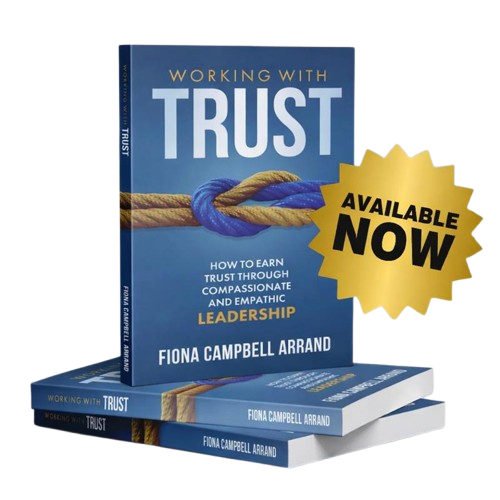
This is where your leadership matters, because people need to know they can trust how you will lead through the uncertainty. In my book Working with Trust, I talk about how leadership is no longer about command and control. The old style of simply telling people what to do does not create the confidence, creativity or ownership organisations need now. People need leaders who can listen, adapt, involve others and create the psychological safety needed for honest conversations.
With the introduction of AI, people are not just learning a new tool, they are having to rethink how work gets done. For some, that will feel energising, others will feel nervous and if you avoid those emotions, or try to push past them too quickly, people can start to withdraw, resist or lose confidence. Resistance happens when people have no clear information about the changes happening.
The Simple Reframe
One of the most helpful tings you can say is, “I don’t know every answer yet, but I do know we can work this through together.” That one sentence changes the emotional tone of the conversation because it shows real honesty and shows you acknowledge the reality of the situation. There is a big difference between being uncertain and being unclear. Uncertainty is natural when things are changing. Lack of clarity happens when people are left guessing. Your role as a leader is not to remove every uncertainty, because that would be impossible. Your role is to create enough clarity, honesty and direction for people to keep moving, learning and contributing.
That is where adaptive leadership becomes important. Adaptive leaders are willing to say, “The old way may not be enough here. We need to think differently.” They help people face reality without creating panic. They make space for learning. They encourage questions. They understand that resistance is not always a problem to be pushed through. Sometimes it is a signal that people need more information, more reassurance or more involvement.
Agile leadership matters too. Agile leaders do not wait until everything is perfect before taking action. They test, learn, adjust and keep communicating as they go. That is exactly the kind of thinking many workplaces need as they introduce AI. There will be mistakes and false starts. Some things will work well and some things will not. That does not mean people have failed, it means they are learning. The question is whether your culture makes that learning safe or not.
A Leadership Story
I have seen many leaders struggle when they feel they are supposed to be the person with all the answers. One senior manager I worked with was leading his team through a major change. Everyone was looking to him for certainty, but the truth was, he did not yet know what the final structure would look like. At first, he tried to stay upbeat and give vague reassurance. He thought that was protecting his team, but it had the opposite effect.
People could sense that something was not being said. His team became cautious. He was trying to be positive, but because he was not being fully clear, people started filling in the gaps for themselves. And as we know, when people do not have enough information, they often create their own version of what might be happening, and usually, that version is far worse than the reality.
Eventually, we talked about what might happen if he stopped trying to manage the uncertainty alone and started having a more open conversation. At the next team meeting, he said something very simple: “I know there are questions I can’t fully answer yet. I don’t want to pretend otherwise. What I can do is keep you informed, involve you where I can and make sure we work through this together.”
The atmosphere changed his team members did not need him to have a perfect plan. They needed him to be honest and to feel included. They also needed to know he was not hiding behind carefully rehearsed words. That how you get people to trust you, by being clear enough, honest enough and human enough for people to relax and engage.
When introducing AI into your business or team start by focusing on people first not the systems or technology. People need open conversations They need to understand why changes are happening, what is known, what is not yet known and how their voices will be included as things develop. When people feel involved, they are far more likely to become curious, thoughtful and willing to experiment.
What To Do Next
Start by being honest about where you are. No need for a complete AI strategy, a perfect implementation plan and every answer ready. Instead start a better conversations. You might say, “We are still learning how AI will fit into the way we work. Some of this will become clearer as we test it. What matters is that we stay open, honest and thoughtful about how we use it.”
That kind of statement does several things. It acknowledges reality. It reduces the pressure to pretend. It invites contribution. It also shows people that learning will be part of the process. And that matters, because the successful use of AI will not only depend on the technology itself. It will depend on how willing people are to think, question, experiment and talk openly about what is working and what is not.
Then ask better questions. What parts of your work could AI support? Where are you curious? Where do you feel unsure? What risks do we need to think about? What should remain human, relational or values-led? These questions help people move from fear or resistance into thinking. They also show respect for the knowledge already in the room.
This is where different leadership styles begin to work together. You need adaptive leadership to help people navigate the unknown. You need agile leadership to test and learn without waiting for perfection. You need collaborative leadership to bring different voices into the conversation. And you need emotionally intelligent leadership to notice how people are really responding beneath the surface. These are some of the leadership styles I explore in more detail in my book Working with Trust, because no single style is enough when you are leading people through uncertainty, change and new ways of working.
Because people may not always tell you directly that they feel worried, confused or left behind. You may notice it their behaviour, energy and engagement. That is when your ability to listen, ask and notice what is not being said becomes essential. The leaders who handle this well will be the ones who bring people with them.
Closing Thought
AI may change many parts of how we work, but it does not remove the need for human leadership. In fact, it makes it even more important. People still need clarity, to feel respected and to know their contribution matters. They still need leaders who can listen, adapt and have honest conversations when the way forward is not yet clear.
You do not need to have all the answers to lead well. You need the courage to be truthful, the flexibility to keep learning and the emotional intelligence to help others feel safe enough to learn with you. That is what builds confidence in uncertain times, and that is the kind of leadership people remember.
___________________________________________________________________________________________________
Click here to learn more about our courses

_______________________________________________________________________________________
FAQs
1. Why is AI creating uncertainty for leaders and teams?
AI is changing how many everyday tasks are done, from writing and admin to recruitment, planning and decision-making. For some people, that feels exciting, but for others it creates questions and they are worried about their role, their skills and what will be expected of them in the future. Leaders need to recognise that uncertainty is not just about the technology itself. It is also about how people interpret what the technology means for them.
2. Do leaders need to have all the answers about AI?
No. In fact, pretending to have all the answers can damage trust if people sense that you are not being fully honest. What people need is clarity, openness and consistency. It is far better to say, “We are still learning, and we will work this through together,” than to give false certainty that later proves unreliable.
3. What leadership style works best when introducing AI into the workplace?
There is not one single leadership style that works in every situation. Leaders need to be adaptive, agile, collaborative and emotionally intelligent. Adaptive leadership helps people work through the unknown. Agile leadership supports testing and learning. Collaborative leadership brings different voices into the conversation. Emotionally intelligent leadership helps people feel safe, heard and respected as change happens.
4. How can leaders build trust when things are uncertain?
Trust is built by being honest, clear and consistent. When leaders share what they know, explain what they do not yet know and keep people informed as things develop, they reduce unnecessary fear and speculation. People trust you when you listen properly, invite questions and involve them in shaping the way forward.
5. How can leaders help their teams feel safe to make mistakes while learning AI?
Leaders can create psychological safety by making it clear that learning will involve testing, adjusting and often getting things wrong. Instead of treating mistakes as failures, they can use them as learning opportunities to reflect and improve. When people know they will not be judged or blamed for every wrong step, they are more likely to experiment, speak up and learn faster.
BUILDING CONFIDENCE,
CLARITY AND TRUST AT WORK
Sign up now for your Free Guide.
We hate SPAM. We will never sell your information, for any reason.