
Why Good Leaders Still Question Themselves
Feb 19, 2026
And why that’s not a weakness
If you’ve ever found yourself replaying a conversation after a meeting, you’re not alone.
In fact, it’s something I see all the time when I work with experienced leaders. You leave a discussion, carry on with the rest of your day, and then later - perhaps when you’re driving home or standing in the kitchen making dinner - the conversation comes back into your mind.
You might find yourself thinking about how it went.
Was I too direct there?
Did I explain that clearly enough?
Did they leave that conversation feeling supported… or slightly knocked?
It’s easy to assume that this kind of reflection means you’re doubting yourself. But in my experience, that’s rarely what’s happening.
More often, it simply means you care about the impact you have on the people around you.
And that’s usually a very good sign.
When Your Words Start Carrying More Weight
Something interesting happens when you step into a leadership role.
Your words begin to carry more weight than they used to.
A comment that feels small to you might stay with someone for the rest of the day. A decision you make can influence how secure someone feels about their work. Even the tone of your voice in a rushed moment can affect whether someone feels comfortable bringing an issue to you next time.
Once you become aware of that influence, it’s natural to start paying closer attention to how you show up in conversations.
You might review things afterwards. You might wonder whether you explained something clearly enough or whether you struck the right balance between challenge and support.
That’s not you doubting your ability.
That’s you recognising the responsibility that comes with leadership.
And that awareness often shows up in leaders who take their role seriously.
A Conversation I Hear Quite Often
A senior manager said something to me recently that you may recognise.
“I feel like I should have this nailed by now.”
When we talked a little more about what he meant, it became clear he wasn’t really questioning his capability. What he was really saying was this:
“I know what I say matters… but sometimes I’m not sure whether I got the balance quite right.”
That’s a very different thing.
So we shifted the question slightly.
Instead of asking himself, “Did I handle that perfectly?” he began asking something much more helpful:
Was I fair?
Was I clear?
Did I give them what they needed in that moment?
That small shift made a huge difference.
Because leadership is not about delivering every conversation flawlessly. It’s about being thoughtful, consistent and willing to adjust when something could have landed better.
The Standard You Might Be Holding Yourself To
Sometimes it’s worth asking yourself what standard you’re actually measuring yourself against.
Are you expecting yourself to anticipate every reaction in the room?
To manage everyone’s emotions perfectly?
To find exactly the right words every time?
No leader does that.
Even very experienced leaders are still learning. Still refining how they communicate. Still adjusting their approach as their teams, circumstances and pressures change.
Strong leadership isn’t about eliminating reflection.
It’s about making sure reflection turns into learning rather than self-criticism.
And there’s a big difference between those two things.
Why Reflection Matters
Interestingly, the leaders who build the strongest and most trusting teams are rarely the ones who believe they always get everything exactly right.
They are the ones who stay curious about their own impact. The ones who notice when something didn’t quite land and are willing to rephrase it. The ones who check back in with someone if needed rather than simply assuming everything was fine.
People notice that.
Not because you are perfect, but because they can see that you care about how your leadership affects them.
And over time, that thoughtfulness builds trust.
So if you occasionally find yourself replaying a conversation, pause before you label it as self-doubt.
It may simply be you paying attention to the kind of leader you want to be.
And that’s not a weakness at all.
In fact, it’s one of the qualities that often separates good leaders from very good ones.
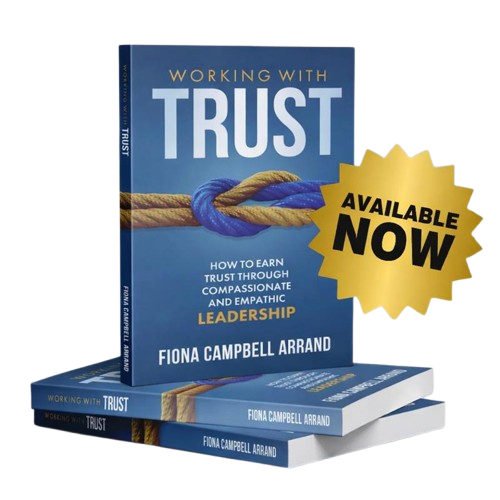
If you enjoy reflecting on these everyday leadership moments, you may also enjoy my upcoming book Working with Trust, where I explore how trust grows through the small conversations and behaviours leaders demonstrate every day.
___________________________________________________________________________________________________

Click here to learn more about our courses

Click Here to Learn More about our NLP Business & Coaching Community
_______________________________________________________________________________________
Fiona Campbell Arrand works with leaders and coaches to build trust, clarity and stronger workplace conversations.
BUILDING CONFIDENCE,
CLARITY AND TRUST AT WORK
Sign up now for your Free Guide.
We hate SPAM. We will never sell your information, for any reason.