
Why Trust Is Becoming the Most Important Leadership Skill
Mar 11, 2026Something interesting is happening in leadership right now.
Technical expertise still matters, of course. But if you look around many organisations, you’ll probably sense that it’s no longer enough on its own. As artificial intelligence becomes more integrated into everyday business, systems are becoming faster, information is easier to access and decisions are being made at greater speed than ever before.
And when that happens, something subtle begins to shift.
Leadership becomes less about what you know and more about how you show up. How clearly you communicate. How well you listen. How calm you remain when conversations become difficult. And perhaps most importantly, how much trust people experience when they work with you.
In environments where change is constant, trust becomes the thing that keeps people steady.
Why Leadership Is Changing
As organisations adopt more technology and AI-supported systems, complexity increases. Processes accelerate, expectations rise and teams often find themselves navigating change more frequently than before.
In that kind of environment, leadership needs something additional. Not more authority and not more control.
What teams need most is clarity.
Clarity of direction so people know where they are heading. Clarity of expectations so they understand what success looks like. And clarity in communication so people are not left trying to interpret what leaders really mean.
When trust and clarity work together, teams feel grounded rather than unsettled. And that steadiness allows people to perform well even when the environment around them is changing quickly.
Trust Is Built Through Behaviour
One of the biggest misunderstandings about trust is that it comes from good intention.
In reality, trust grows through consistent behaviour.
It develops when people experience honesty in conversations, respect in how they are treated and reliability in the way decisions are communicated and followed through. It grows when leaders take time to understand different perspectives, offer support when it is needed and respond promptly when issues arise.
These behaviours may seem simple, yet they shape how people experience your leadership every day.
Over time those experiences form a pattern, and that pattern determines whether people feel confident, uncertain or disengaged when they work with you.
A Practical Leadership Framework
Because trust can sometimes feel like an abstract idea, I developed the Working With Trust™ Framework to give leaders a practical way of strengthening trust in everyday conversations.
If you’d like to explore the framework in more detail, I’ve created a short guide that explains how the models work and how they support leadership and coaching conversations.
You can download it here:
The Working With Trust Leadership Framework – Overview Guide
The Leadership Capabilities That Matter Most
When you look closely at strong leadership in modern organisations, three capabilities tend to stand out.
The first is emotional intelligence — the ability to regulate yourself in difficult situations and respond thoughtfully rather than reacting too quickly. Leaders who develop this skill remain steady even when conversations are challenging, and that steadiness allows others to feel more secure.
The second is communication awareness. Understanding how language, tone and behaviour influence how people interpret what you say makes an enormous difference to the outcomes of everyday conversations.
And the third is something we sometimes overlook: the internal qualities that shape how people experience you. Your presence, your awareness, your ability to stay curious and your willingness to listen carefully before responding.
These qualities might sound subtle, yet they have a powerful influence on how teams experience leadership.
From Knowledge to Capability
Another shift happening in leadership development is the move away from fragmented learning.
Many professionals attend courses where they learn individual techniques or models, yet struggle to integrate those ideas into real conversations once they return to work.
True capability develops differently.
It grows when new ideas are applied, practised and reflected on repeatedly in real situations. When leaders begin to observe their own behaviour more carefully, adjust their communication style and test new approaches in conversations that genuinely matter.
Over time that practice becomes confidence.
And confidence becomes consistent leadership behaviour.
Why This Matters Now
As workplaces become more complex, the human side of leadership becomes more important rather than less.
People still want to feel heard. They still want clarity about what is expected of them and they still want to feel that their leader understands the challenges they are facing.
Technology may support decision-making, but trust remains a deeply human experience.
When leaders develop the ability to communicate clearly, regulate themselves under pressure and listen carefully to the people around them, teams begin to feel steadier, more motivated and more willing to contribute their best work.
And that is when performance begins to improve naturally.
A Final Thought
If you think about the leaders who have had the greatest positive influence on you throughout your career, it probably wasn’t their technical expertise that stood out most.
More often it was the way they communicated, the way they listened and the way they made people feel when working with them.
Those are the qualities that build trust.
And trust, more than anything else, is what allows leadership to work.
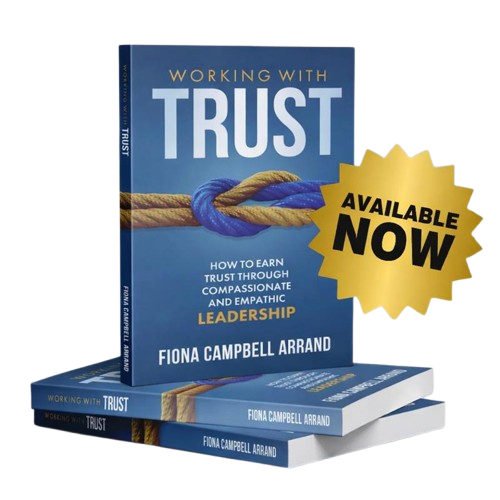
If you’d like to explore these ideas further, you may enjoy my upcoming book Working with Trust, which explores how everyday leadership behaviours quietly shape the trust people place in you as a leader.
Fiona Campbell Arrand works with leaders and coaches to build trust, clarity and stronger workplace conversations.
BUILDING CONFIDENCE,
CLARITY AND TRUST AT WORK
Sign up now for your Free Guide.
We hate SPAM. We will never sell your information, for any reason.